Enneagram colors of all nine types
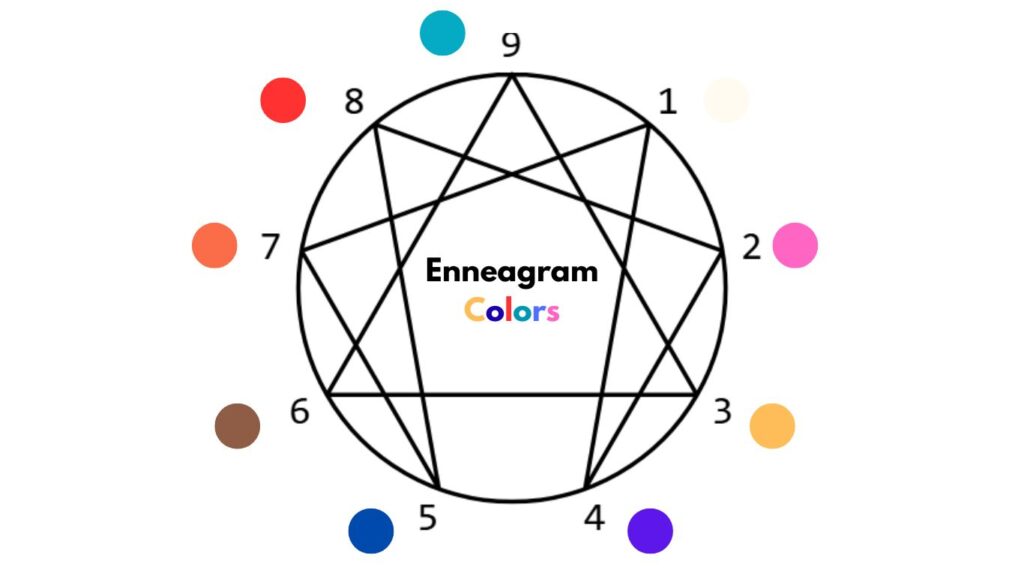
Colors speak in a soft emotional language.
They help express feelings, moods, and parts of who we are that do not always come out in words.
When it comes to the Enneagram, many people enjoy connecting each type with certain colors. These colors are not official, and there is no single system everyone follows. Instead, they come from shared patterns, cultural symbolism, color psychology, and the personal experiences of teachers, artists, and communities.
This guide is meant to feel calm and easy.
My intention is to help you understand the colors often linked with each type, and to invite you to explore the palette that feels most honest and comforting to you.
Take your time with it.
Let the colors settle gently as you read.
Quick chart: common color associations for the nine types
Here is a simple overview of the colors most frequently connected to each type across many sources. These patterns appear again and again in articles, design pages, online communities, and psychological interpretations of color.
Quick Chart (Enneagram Types & Common Colors)
| Type | Common Colors | Emotional Qualities |
|---|---|---|
| Type 1: The Reformer | White, gray, silver | Clarity, order, balance |
| Type 2: The Helper | Pink, rose, lavender | Warmth, connection, care |
| Type 3: The Achiever | Gold, yellow, orange | Confidence, drive, brightness |
| Type 4: The Individualist | Purple, deep blue | Depth, creativity, emotional richness |
| Type 5: The Investigator | Navy, blue-gray, forest green | Quiet focus, insight, calm thought |
| Type 6: The Loyalist | Blue, brown, muted yellow | Stability, trust, groundedness |
| Type 7: The Enthusiast | Bright yellow, orange, multicolor | Joy, curiosity, playful energy |
| Type 8: The Challenger | Red, black, deep brown | Strength, intensity, presence |
| Type 9: The Peacemaker | Soft green, teal, gentle blue | Harmony, peace, natural ease |
You may already feel a connection to the colors of your type.
Or you may discover that another palette speaks to you more deeply. Both are perfectly valid.
Are Enneagram colors official?
No. There is no official or standardized color model for the Enneagram.
What exists is a natural, collective pattern.
When many people over time associate similar colors with similar qualities, a shared symbolism emerges. Designers, writers, and communities build on these patterns, and the colors become familiar expressions of each type’s emotional tone.
Think of the colors as gentle suggestions. They offer inspiration, not rules.
Why these colors appear again and again
Colors have emotional meanings that feel intuitive to most people.
Warm colors often express connection and enthusiasm. Cool tones express calm or introspection. Deep hues evoke strength or intensity. Soft tones bring a sense of peace.
Each Enneagram type has an inner motivation that subtly shapes its emotional world.
Colors become a simple way to reflect these motivations visually.
This is why many different sources, even if unrelated, tend to choose similar colors for each type.
The nine types and their color stories
Below you’ll find a calm and thoughtful explanation of each type’s color associations.
Use this as inspiration to understand yourself and others with more softness.
Type 1: the reformer
Common colors: white, gray, silver
These colors carry a sense of clarity, honesty, and calm order. They feel clean and steady, much like the inner rhythm of Type 1. The simplicity of these tones reflects a desire for balance, integrity, and alignment.
Type 2: the helper
Common colors: pink, rose, soft lavender
These colors feel warm and inviting. They hold a gentle emotional openness, similar to the way Type 2 naturally reaches toward connection. They tend to express kindness, softness, and a desire to nurture.
Type 3: the achiever
Common colors: gold, yellow, bright orange
These tones have a natural sense of movement and brightness. They suggest motivation, hope, and the desire to shine. Type 3 often carries an inner spark, and these colors mirror that forward energy.
Type 4: the individualist
Common colors: purple, deep blue
These colors hold emotional depth. They feel rich, expressive, and introspective, reflecting Type 4’s desire to be true to themselves. Purple especially has long been associated with creativity and inner meaning.
Type 5: the investigator
Common colors: navy, blue-gray, forest green
These tones feel calm and steady, offering a sense of quiet space. They reflect the thoughtful, observant nature of Type 5. They support focus, reflection, and a feeling of self-sufficiency.
Type 6: the loyalist
Common colors: blue, brown, muted yellow
These are grounding colors. They feel practical and consistent, which connects naturally to Type 6’s need for reliability and trust. These tones bring a steady, reassuring atmosphere.
Type 7: the enthusiast
Common colors: bright yellow, orange, multicolor
These tones bring a sense of play and possibility. They feel light, hopeful, and full of movement. Type 7 often seeks experiences that feel alive and open, and these colors carry that same energy.
Type 8: the challenger
Common colors: red, black, deep brown
These colors feel powerful and direct. They carry strength, boldness, and a sense of intensity. They reflect Type 8’s natural presence and their desire to move through the world with determination.
Type 9: the peacemaker
Common colors: soft green, teal, gentle blue
These tones feel peaceful and grounding. They connect to nature, calm, and quiet harmony. They match Type 9’s desire for ease, unity, and inner stillness.